class: center, middle, inverse, title-slide # Course Overview ## AI / Machine Learning<br>Spring 2022 ### Ken Arnold ### 2022-01-10 --- ## What is this course? This is a course on developing AI systems using machine learning, with a particular emphasis on deep neural networks. ### Objectives By the end of this course, you will demonstrate growth in your ability to: - Design a machine learning system to address a given challenge. - Implement machine learning systems using both high-level and low-level programming interfaces. - Critically analyze the use and misuse of AI and ML techniques in situations affecting people - Describe the history and trajectory of artificial intelligence --- ## Real objective .center[ **You graduate and do amazing work in AI.** ] So, you should be: * self-directed, collaborative learners * able to be immediately productive at some kinds of ML problems * in the habit of practicing the integrity and perseverance needed to work in a team --- ## Approach - Hands-on: lots of programming and analysis. - Typically one "lecture" meeting per week, two lab days - Reading and watching videos outside of class is expected. Make time for it. --- ## Sequence - First 6 or 7 weeks: fundamentals of machine learning - Top-down: image classification using convolutional neural nets - Bottom-up: array computing, elements of neural network modeling, learning by gradient descent - Then: repeat using language processing and Transformers models - Finally: applications and other topics (human-AI interaction, reinforcement learning, engineering and deployment considerations, ...) - Discussions on applications, ethics and social impact, and Christian perspectives throughout --- ## Materials .pull-left[ 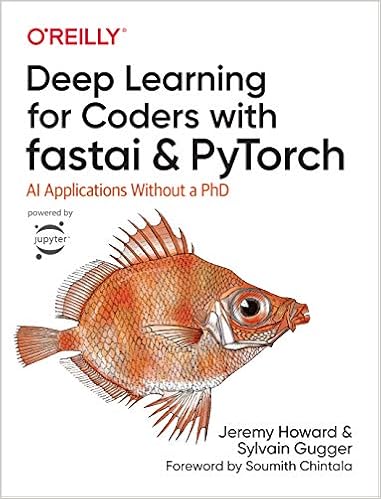 ] .pull-right[ Why the [fastai course](https://course.fast.ai/)? - Past students of the fastai course have published original research and won competitions - Based on PyTorch (a close competitor to TensorFlow, popular in academic research) - Custom [software library](https://docs.fast.ai/) adds a [layered API](https://www.mdpi.com/2078-2489/11/2/108/htm) to speed up development - Jupyter Notebooks: you can run everything yourself ] --- ## Why not just learn this on your own? This course gives you: * Structure * An instructor * Peers * Freedom to ask stupid questions --- ## Structure We will vary our pace depending on students' needs, but the structure will be predictable: * **Weekend**: read (actively!) a textbook chapter, watch a video lecture * **Monday Lab**: apply what you've just read, extend it slightly * **Tuesday**: write your weekly learning reflection, contribute to discussion forums * **Wednesday Discussion** (in classroom): debrief lab, discuss perspectives * **Thursday**: take a content quiz (most weeks, not this week) * **Friday Lab**: work on homework / project; micro-lectures as needed --- ## Who am I? * Husband, father of two 4-year-old girls * Natural Language Processing + Human-Computer Interaction --- ## Peers Your peers provide: * **Collaborators**. You'll be able to do great projects together. * **Learning community**. I may be one of your last official teachers. But you must keep learning. * **Discussion partners**. Your peers bring valuable perspectives. * **Practice analyzing other people's work**. It will be most of what you do. So we must practice it. We will do some peer feedback during our time together. --- ## "I don't know" * Say this often. * I will too. * Ask questions on Piazza. * When you've figured it out, communicate (e.g., a blog) --- ## Weekly Reflections - Goal: *meta*cognition: awareness of what you know and don't. - weekly short writeup highlighting two pieces of work: 1. something that shows you've achieved the week's learning objectives (typically lab / homework) 2. something you've revised from a previous week, and how it's improved. - Simple grading system: - Effort: credit for timely submission (don't get behind!) - Mastery: simple grades for the items highlighted in reflections details in syllabus. --- ## Projects - Midterm project: analyze and partially replicate an existing machine learning result (paper, blog post, Kaggle competition, etc.) - Final project: do new work